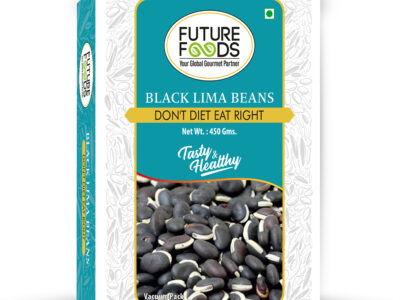
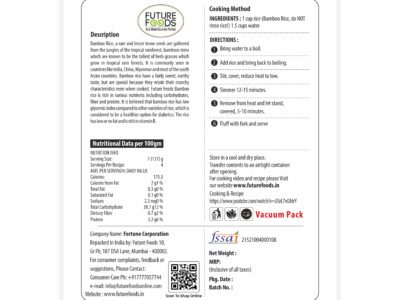
Future Foods Black Lima Beans | Butter Beans | Versatile Superfood | Good Source of Dietary Fiber & Iron | Low Fat Content | Mild Flavor & Creamy Texture (Copy)
1. Distinct Appearance: Black lima beans are easily identifiable by their creamy-white colour with a prominent black spot on one side, resembling an eye. This characteristic sets them apart from other types of beans.
2. Nutritional Profile: These beans are rich in essential nutrients such as protein, dietary fibre, folate, iron, potassium, and other vitamins and minerals. They offer a valuable source of plant-based protein and are low in fat.
3. Versatility in Cooking: Black lima beans are versatile and can be used in various culinary preparations. They are commonly used in soups, stews, salads, dips, and side dishes. They absorb flavours well and can complement a wide range of ingredients and spices.
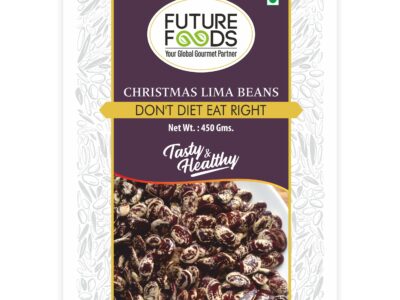
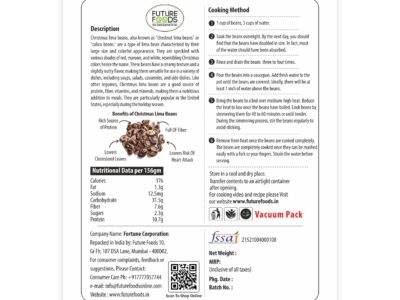
Future Foods Christmas Lima Beans | Double Butter Beans | Protein Rich | Good Source of Soluble Fiber & Vitamin A | Sweet & Mild Taste | Meaty Texture | Gluten Free | Low in Fat Content
'- Christmas Lima beans, also known as chestnut Lima beans, are a type of heirloom bean characterized by their unique appearance and flavor.
- They are named "Christmas" because of their festive coloring, with speckled maroon and cream-colored markings resembling holiday decorations.
- These beans have a creamy texture and a slightly nutty flavor, reminiscent of chestnuts hence the alternate name.
- Christmas Lima beans are a good source of protein, fiber, and various nutrients including iron, magnesium, and potassium.
- They are versatile in cooking, suitable for soups, stews, salads, and side dishes.
- When cooked, they retain their shape well and add visual appeal to dishes with their vibrant colors.
- Christmas Lima beans are often considered a gourmet ingredient and may be found in specialty food stores or ordered online.
- Cultivating Christmas Lima beans can contribute to biodiversity preservation, as they are heirloom varieties with unique genetic traits.
- These beans have a rich history, originally cultivated by indigenous peoples in the Americas long before European colonization.